
Published by DWT Wellness Studio | Cedar Knolls, NJ | March 2025
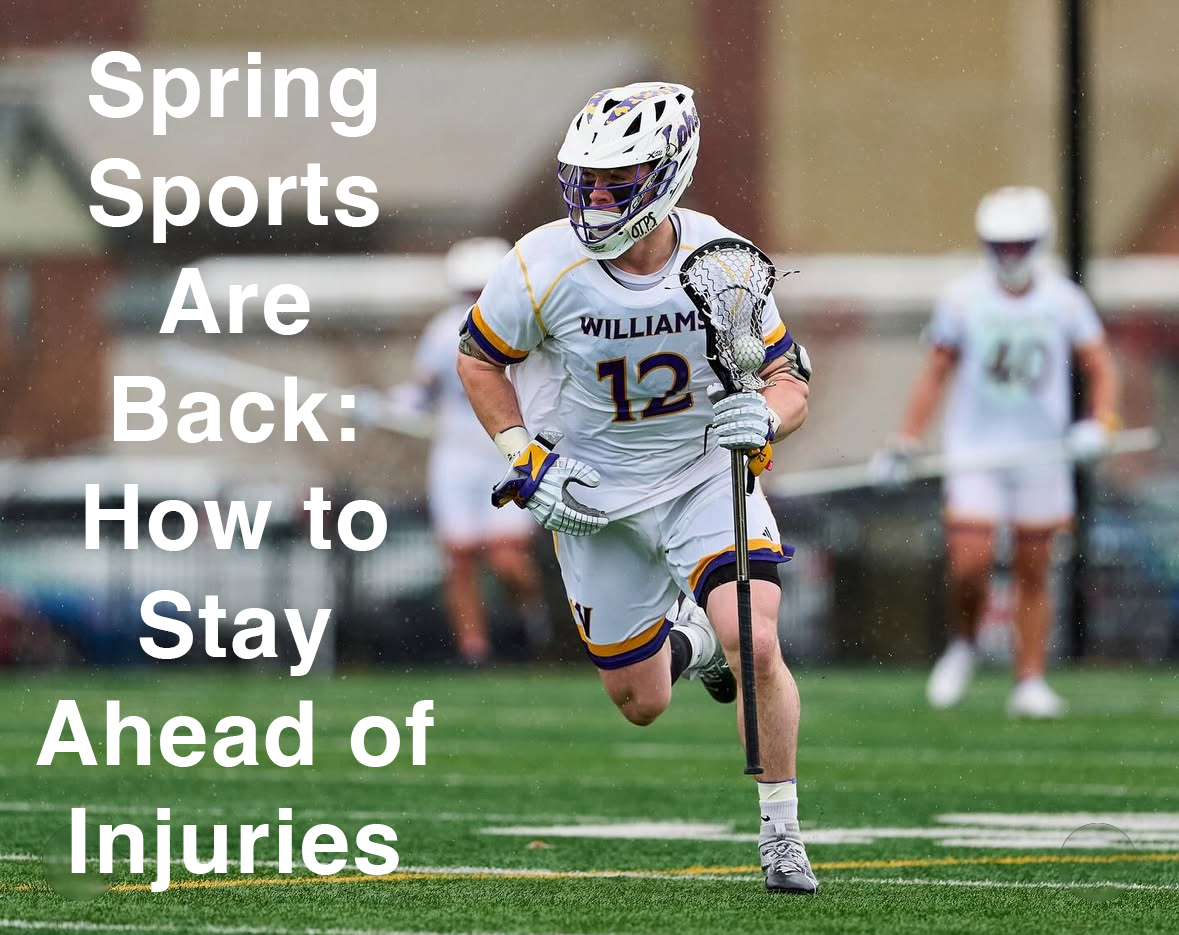
The weather is warming up, cleats are coming out of storage, and lacrosse, baseball, golf, and track seasons are officially back. For athletes of all ages — from weekend warriors to youth competitors — spring signals a rapid ramp-up in activity after a relatively sedentary winter. And with that ramp-up comes risk.
Overuse injuries are among the most common springtime complaints for athletes, and they rarely announce themselves loudly. Instead, they build quietly — a little tightness here, some soreness there — until something gives. The good news: with the right recovery protocols in place, most of these injuries are preventable.
At DWT Wellness Studio in Cedar Knolls, NJ, we specialize in exactly this kind of proactive, drug-free recovery support for athletes. Here’s what you need to know heading into spring sports season.
Why Spring Is Peak Season for Overuse Injuries
Overuse injuries occur when repetitive stress is applied to a body that hasn’t had adequate time to adapt. After months of lower activity during winter, tendons, muscles, and joints can lose conditioning — and when athletes suddenly resume full training loads, the mismatch creates vulnerability.
Common spring overuse injuries include:
- Rotator cuff tendinitis (baseball, softball, swim)
- Shin splints and stress fractures (track, soccer, lacrosse)
- Golfer’s elbow and tennis elbow (golf, racquet sports)
- IT band syndrome and patellofemoral pain (running, cycling)
- Ankle sprains and Achilles tendinopathy (soccer, lacrosse, basketball)
Research published in the American Journal of Sports Medicine found that overuse injuries account for nearly 50% of all sports injuries in youth athletes — and rates spike in the early weeks of a new season when training volume increases abruptly.
The Science of Recovery: What Your Body Actually Needs
Effective injury prevention isn’t just about rest — it’s about active recovery. That means supporting circulation, reducing inflammation, restoring alignment, and keeping the nervous system out of chronic stress mode. Here’s how the therapies at DWT Wellness Studio address each of these factors:
PEMF Therapy (Pulsed Electromagnetic Field)
PEMF therapy uses low-frequency electromagnetic pulses to stimulate cellular repair, reduce inflammation, and enhance circulation at the tissue level. For athletes, this means faster recovery between training sessions and less cumulative inflammatory load over a season.
A 2009 study in the Journal of Orthopaedic Surgery and Research demonstrated that PEMF therapy significantly reduced pain and improved function in patients with musculoskeletal conditions. More recent research supports its use in sports recovery contexts for reducing delayed-onset muscle soreness (DOMS) and accelerating soft tissue healing.
Normatec Compression Therapy
Normatec’s sequential compression system uses dynamic air pressure to flush metabolic waste from muscles, improve lymphatic flow, and reduce post-exercise swelling. Elite athletes across the NFL, NBA, and Olympic sports have made compression therapy a standard recovery tool — and it’s now accessible right here in Cedar Knolls.
A study published in the Journal of Strength and Conditioning Research found that pneumatic compression significantly reduced muscle soreness 24 and 48 hours after intense exercise compared to passive recovery, supporting its value for athletes with high training loads.
Chiropractic Care & Biomechanical Alignment
Many overuse injuries originate not in the site of pain, but in compensation patterns created by misalignment elsewhere. A hip that’s slightly off, a thoracic spine that’s restricted — these subtle imbalances change how force travels through the kinetic chain, overloading structures that weren’t designed to absorb it.
Regular chiropractic adjustments restore joint mobility, improve nerve communication, and correct the biomechanical inefficiencies that lead to repetitive stress injuries. Our partnership with Wellness Within Chiropractic makes it easy to integrate structural care with cellular recovery in a single, coordinated plan.
A Note on Youth Athletes: More Vulnerable Than You Think
Youth athletes face unique risks during spring sports season. Growing bones have open growth plates — areas of cartilage that are more vulnerable to stress than mature bone. Conditions like Osgood-Schlatter disease (knee) and Sever’s disease (heel) are common in adolescent athletes and often flare during high-volume spring seasons.
The American Academy of Pediatrics recommends that young athletes take at least one to two days off per week from sports and avoid single-sport specialization before puberty to reduce overuse injury risk. Recovery tools like PEMF and compression therapy offer a gentle, non-invasive way to support young bodies under high demand — without pharmaceuticals or invasive intervention.
Signs You’re Falling Behind on Recovery
Watch for these early warning signs that your body needs more recovery support:
- Soreness that doesn’t resolve within 48–72 hours after activity
- Joint stiffness that takes more than 15–20 minutes to warm up
- Asymmetrical tightness or weakness (one side notably different from the other)
- Recurring “tweaks” in the same muscle or joint
- Fatigue that doesn’t improve with sleep
- Declining performance despite consistent training
Any of these signs indicate that training stress is outpacing recovery. The solution isn’t always to train less — it’s to recover smarter.
How DWT Wellness Studio Supports Spring Athletes
At DWT Wellness Studio in Cedar Knolls, NJ, every therapy we offer is drug-free, non-invasive, and designed to help your body recover faster and perform better. Here’s how our services map directly to spring sports recovery:
For Inflammation & Cellular Recovery:
PEMF Therapy (Full-Body, Targeted, or Sports Recovery sessions) uses pulsed electromagnetic fields to stimulate tissue repair and reduce inflammation at the cellular level — ideal between training sessions or after games.
For Muscle Soreness & Circulation:
Normatec Compression Therapy and Athletic Leg Recovery Sessions use dynamic air pressure to flush lactic acid, reduce swelling, and restore circulation to overworked legs — a favorite for lacrosse, baseball, and track athletes.
For Tissue Repair & Pain Relief:
Red Light Therapy penetrates deep into soft tissue to accelerate healing, reduce joint pain, and improve range of motion. Our Red Light + PEMF Combo Session stacks both modalities for maximum recovery impact.
For Full-Body Tension & Nervous System Reset:
Infrared Sauna sessions loosen tight muscles, support detoxification, and help the nervous system downregulate after high-stress competition. Pair it with our Recovery Combo for a complete post-game wind-down.
For Mental Performance & Stress:
BrainTap Neuro-Optimization and Nervous System Reset Sessions use guided neurotechnology to reduce performance anxiety, improve sleep quality, and help athletes mentally recover between events — an often-overlooked edge in competitive sports.
For Mobility & Muscle Activation:
Whole Body Vibration Therapy improves neuromuscular activation, increases flexibility, and can be used as a warm-up tool before practice or a recovery aid afterward.
📍 DWT Wellness Studio | Cedar Knolls, NJ
🌐 dooliganswellnesstherapy.com
📸 @do_dwt on Instagram
Ready to stay ahead of spring injuries? Book a session at DWT Wellness Studio today →
Sources
1. Aicale R, Tarantino D, Maffulli N. Overuse injuries in sport: a comprehensive overview. J Orthop Surg Res. 2018;13(1):309. https://josr-online.biomedcentral.com/articles/10.1186/s13018-018-1017-5
2. Meeuwisse WH, et al. A dynamic model of etiology in sport injury: The recursive nature of risk and causation. Clin J Sport Med. 2007;17(3):215–219.
3. Rohde C, et al. Effects of pulsed electromagnetic fields on clinical outcomes. J Orthop Surg Res. 2009. https://pubmed.ncbi.nlm.nih.gov/19930651/
4. Cochrane DJ. Alternating hot-and-cold water immersion for athlete recovery: A review. Phys Ther Sport. 2004; (referenced alongside compression research).
5. Sperlich B, et al. Compression garments and exercise: No influence of pressure applied. J Strength Cond Res. 2011;25(1):75–83.
6. American Academy of Pediatrics Council on Sports Medicine and Fitness. Overuse injuries, overtraining, and burnout in child and adolescent athletes. Pediatrics. 2007;119(6):1242–1245. https://publications.aap.org/pediatrics/article/119/6/1242/70699/
7. Jayanthi N, et al. Sports specialization in young athletes: Evidence-based recommendations. Sports Health. 2013;5(3):251–257. https://www.ncbi.nlm.nih.gov/pmc/articles/PMC3658407/
8. American College of Sports Medicine. Prevention of overuse injuries in young athletes. Position Stand, 2011.
— DWT Wellness Studio | Cedar Knolls, NJ | Accelerate Recovery. Reduce Pain. Move Better.